
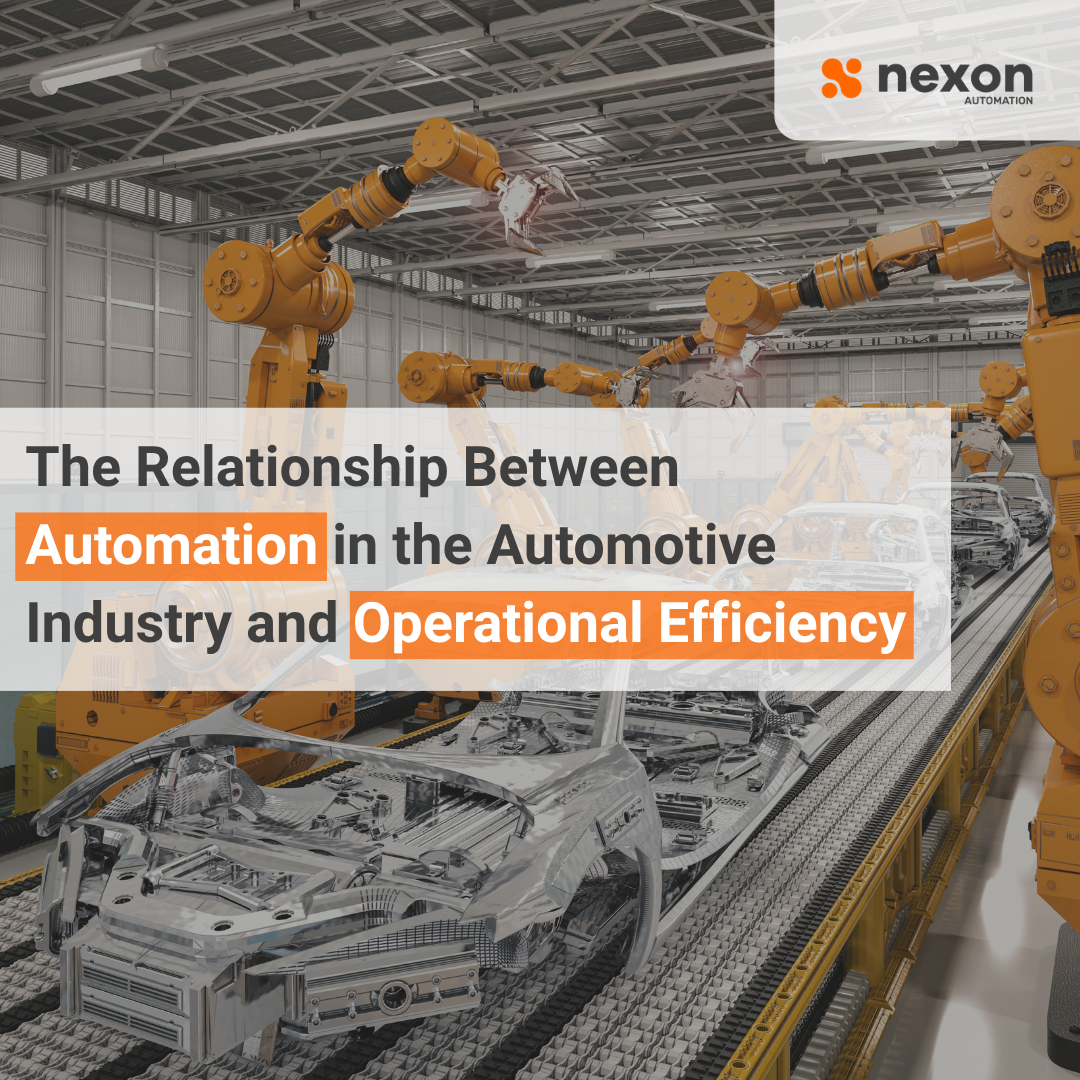
Focus on Controls (PLCs and SCADA), Industrial Robots, AMRs, and Key Automotive Metrics
Introduction
Advanced manufacturing in the automotive industry is a cornerstone of innovation and efficiency. With a balanced integration of control systems like Programmable Logic Controllers (PLCs) and Supervisory Control and Data Acquisition (SCADA), industrial robots, and Autonomous Mobile Robots (AMRs), assembly plants have evolved from manual processes to highly efficient production lines.
– PLCs enable flexible programming of operational sequences, allowing for rapid adjustments to production needs.
– SCADA systems allow remote visualization and control, facilitating oversight of complex operations from centralized interfaces.
– Industrial robots perform repetitive tasks with high precision, such as welding and assembly, reducing human error.
– AMRs optimize autonomous material transport, using advanced sensors and navigation to streamline logistics.
Recent analyses show that adequate automation allows automotive manufacturers to achieve Overall Equipment Effectiveness (OEE) levels above 85% in highly automated lines—resulting in greater productivity and cost reduction.
For instance, while the global average OEE in manufacturing hovers around 55-60%, top automotive facilities, such as those aiming for world-class status, consistently target and achieve 85% or higher through advanced automation integration.
Training in these technologies is just as essential as the equipment itself, empowering personnel to operate optimally and troubleshoot efficiently, avoiding costly interruptions.
This white paper explores how automation—focused on PLCs, SCADA, industrial robots, and AMRs—directly impacts efficiency metrics, personnel training, and the importance of technological partnerships, with a focus on automotive manufacturers.
Automation Level in Automotive Manufacturing
In typical automotive industrial automation, PLCs, SCADA systems, industrial robots, and AMRs play central and complementary roles:
– PLCs execute real-time control logic, managing automated sequences and responding quickly to process changes, often integrating with sensors for sub-second reaction times.
– SCADA provides supervisory interfaces that collect data from multiple sources for informed decision-making, enabling visualization of key performance indicators (KPIs) across the factory floor.
– Industrial robots handle precise, repetitive tasks like welding, painting, and assembly, with payloads up to 1,300 kg and repeatability of ±0.05 mm in models from manufacturers like FANUC and ABB.
– AMRs revolutionize smart material handling with autonomous, flexible transport using sensors, cameras, and advanced navigation algorithms, such as LiDAR and SLAM (Simultaneous Localization and Mapping).
These technologies integrate to enable fully automated factories. In semi-automated lines, hybrid data analysis from PLCs, SCADA, robot sensors, and AMRs optimizes cycle times and enables predictive maintenance. For example, In several US plants Otto AMRs are used for efficient automation in production logistics, enhancing material flow and reducing manual intervention. Similarly, Mercedes-Benz integrates AMRs and humanoid robots in its production network to automate logistics and assembly, improving overall throughput.
Proper training is crucial—trained staff can maximize system potential and minimize risks. Studies show that effective use of these technologies can reduce operational costs by up to 30% and improve overall efficiency by 25%. Integration with Manufacturing Execution Systems (MES) and AI algorithms ensures precise synchronization with just-in-time principles. A 2024 report highlights that generative AI, combined with robotics, has reduced design cycle times by 30% at major automakers like Mercedes-Benz. In the U.S., robot installations in the automotive industry rose by 10.7% in 2024, driving productivity gains.
Impact on Efficiency Metrics
Overall Equipment Effectiveness (OEE)
OEE combines availability, performance, and quality. Highly automated plants with trained personnel can reach up to 87% OEE:
– PLCs optimize sequences by automating control loops, reducing setup times.
– SCADA enables real-time monitoring, allowing for immediate adjustments to maintain performance.
– Robots reduce downtime in critical tasks through consistent operation and built-in fault tolerance.
– AMRs ensure continuous material supply, minimizing idle times.
Real-time data integration improves visualization and production timing. Digital transformation driven by automation can yield up to 30% efficiency gains and boost OEE to 80%. According to a 2024 global benchmark analysis, automotive facilities in Western countries aiming for world-class status target OEE scores of 85% or higher, with automation playing a pivotal role, while the industry average is around 60-75%. For example, GM and Mercedes-Benz’s AI-enhanced production systems have contributed to consistent OEE improvements through better quality control and monitoring.


Takt Time
Takt Time defines the production pace needed to meet customer demand. Automation helps balance assembly lines:
– PLCs provide precise control over timing and sequencing.
– SCADA adjusts in real time based on data feeds.
– Robots accelerate processes, handling tasks at speeds up to 2 m/s.
– AMRs maintain steady material flow, with navigation accuracies of ±10 mm.
Proper integration ensures components arrive at workstations in under 60 seconds, aligning with Takt Time and reducing waste. In automotive plants, AMR-PLC synchronization has cut transport delays by 30%, directly optimizing Takt Time. Volkswagen, for instance, has implemented AMRs in its Wolfsburg plant to achieve sub-minute material deliveries, aligning with JIT demands and reducing cycle times by 15-20%.
Unplanned Downtime Reduction
Unplanned downtime costs the automotive industry an estimated $50 billion annually. Automation mitigates this through predictive maintenance:
– SCADA sends real-time alerts on anomalies.
– PLCs detect logical anomalies in control sequences.
– Robots include built-in diagnostics for self-monitoring.
– AMRs monitor navigation for early issue detection using onboard sensors.
Integration with MES eliminates downtime and extends component lifespan. Connected machines can reduce unplanned downtime by 48%. The Siemens «True Cost of Downtime 2024» report reveals that automotive manufacturers face $2.3 million per hour in downtime costs, a twofold increase from 2019, with Western plants like those in the U.S. and Europe losing up to 29 hours per month on average. Ford’s implementation of predictive analytics via SCADA and robots has reportedly cut downtime by 40% across facilities.
Training Requirements for Operators and Maintenance Personnel
To maximize automation benefits, personnel must receive specialized training:
– Operators need skills in system operation, PLC programming (e.g., ladder logic), SCADA troubleshooting, robot handling (including teach pendant usage), and AMR management (fleet coordination software).
– Maintenance staff require technical training in predictive maintenance, robot calibration, SCADA configuration, and AMR fleet management (including battery optimization and path planning).
Programs like those offered by NEXON Automation emphasize practical knowledge in motors, brakes, electrical systems, PLC programming, SCADA interfaces, and robot diagnostics. Total Productive Maintenance (TPM) focuses on empowering operators with digital tools and autonomous task capabilities. Training also includes OSHA compliance and troubleshooting across all technologies. A Deloitte 2025 Global Automotive Consumer Study notes that 78% of manufacturers prioritize AI and automation training to realize efficiency gains.
The Need for Technological Partners with Engineering Expertise
Automotive automation demands partners with proven engineering experience. NEXON Automation supports system integration and digital transformation, offering expertise in PLC-SCADA-robot-AMR ecosystems.
Collaborations with software providers, robot manufacturers (e.g., FANUC, ABB), AMR suppliers (e.g., Otto), and PLC vendors (e.g., Siemens, Rockwell) drive innovation and reduce implementation burdens. In IT/OT convergence, these partnerships lower costs and enhance operational excellence—especially in synchronizing PLCs with robots and AMRs. Mercedes-Benz’s partnership with Apptronik for humanoid robots like Apollo has added agility, reducing manual tasks and improving efficiency.
Conclusion & Recommendations
Advanced automation in automotive manufacturing—centered on PLCs, SCADA, industrial robots, and AMRs—boosts efficiency through improved OEE (up to 85-87%), optimized Takt Time (with sub-60-second deliveries), and reduced downtime (by 40-50%). Real-world examples from Western manufacturers like GM, Volkswagen, Ford, and Mercedes-Benz demonstrate cost reductions of 30% and efficiency gains of 25-30%.
Success depends equally on training, which is as vital as the equipment for optimal operation and troubleshooting.
Companies should assess their current automation level, implement certified training programs, and seek strategic partnerships with experienced engineering firms like NEXON Automation to maximize returns. By 2025, prioritizing these elements could mitigate the $2.3 million hourly downtime costs and position firms for sustainable growth in a competitive landscape.
Deja una respuesta